 Skip to main content


THE WAIVER OF THE IMPLIED WARRANTY OF HABITABILITY: PROTECTION AGAINST CLAIMS BY SUBSEQUENT PURCHASERS IN ILLINOIS
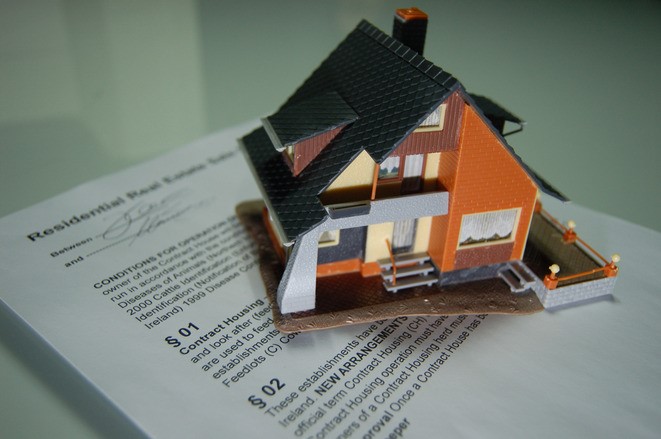
On May 19, 2016, the Illinois Supreme Court handed a victory to developers and builder-vendors of new residential construction. In Fattah v. Bim, 2016 IL 119365, the court held that the implied warranty of habitability may not be extended to a second purchaser of a home when a valid, bargained-for waiver of the warranty was executed between the builder-vendor and the first purchaser. In Fattah, the original builder-vendor built and sold a new home in the Chicago suburbs in 2007. Approximately three years later, the original purchaser resold the home. That sale included an “as-is” addendum in the sales contract. Not long after the second sale, portions of a retaining wall around the rear patio of the house began to give way resulting in a portion of the patio collapsing. The second purchaser brought suit alleging, among other things, a breach of the implied warranty of habitability. At the trial court level, the plaintiff was denied relief because the trial court found that the original waiver of the implied warranty of habitability was enforceable as against the second purchaser. The Illinois Appellate Court reversed but the Illinois Supreme Court ultimately agreed with the trial court.
The Illinois Supreme Court clarified that its holding in the 1982 case of Redarowicz v. Ohlendorf, 92 Ill. 2d 171 (1982) was decided on a particular set of facts that warranted the extension of the implied warranty of habitability to a subsequent purchaser. However, in the Fattah case, the question was whether an original, valid waiver of the implied warranty of habitability with the first purchaser of a home would extend to a second purchaser of that home. The Redarowicz decision never considered this question. The Illinois Supreme Court held that for a variety of legal and public policy reasons the waiver should be enforced as against the second purchaser. Among other reasons, the court stated that when a builder-vendor offers the original purchaser of a new house a bargained-for waiver of the implied warranty of habitability to gain financial certainty as to when its exposure for certain liabilities ends, that certainty would be lost if the waiver were not enforceable against a second purchaser. In addition, the court found it nonsensical to allow an implied warranty of habitability to be resuscitated in the face of an otherwise valid waiver simply because a home had been resold.